

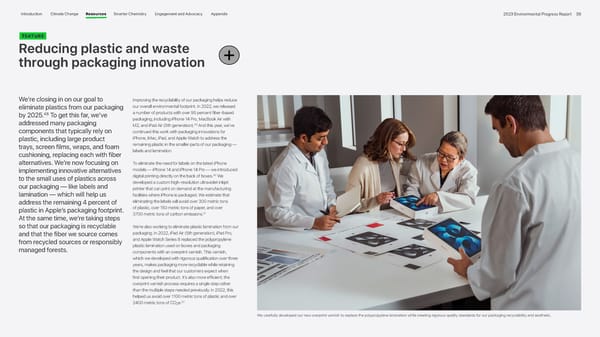
Introduction Climate Change Resources Smarter Chemistry Engagement and Advocacy Appendix 2023 Environmental Progress Report 39 FEATURE Reducing plastic and waste through packaging innovation We’re closing in on our goal to Improving the recyclability of our packaging helps reduce eliminate plastics from our packaging our overall environmental footprint. In 2022, we released by 2025. 48 To get this far, we’ve a number of products with over 95 percent fiber-based addressed many packaging packaging, including iPhone 14 Pro, MacBook Air with M2, and iPad Air (5th generation). 49 And this year, we’ve components that typically rely on continued this work with packaging innovations for plastic, including large product iPhone, iMac, iPad, and Apple Watch to address the trays, screen films, wraps, and foam remaining plastic in the smaller parts of our packaging — cushioning, replacing each with fiber labels and lamination. alternatives. We’re now focusing on To eliminate the need for labels on the latest iPhone implementing innovative alternatives models — iPhone 14 and iPhone 14 Pro — we introduced to the small uses of plastics across digital printing directly on the back of boxes. 50 We our packaging — like labels and developed a custom high-resolution ultraviolet inkjet printer that can print on demand at the manufacturing lamination — which will help us facilities where iPhone is packaged. We estimate that address the remaining 4 percent of eliminating the labels will avoid over 300 metric tons plastic in Apple’s packaging footprint. of plastic, over 150 m etric tons of paper, and over At the same time, we’re taking steps 3700 metric tons of carbon emissions. 51 so that our packaging is recyclable We’re also working to eliminate plastic lamination from our and that the fiber we source comes packaging. In 2022, iPad Air (5th generation), iPad Pro, from recycled sources or responsibly and Apple Watch Series 8 replaced the polypropylene managed forests. plastic lamination used on boxes and packaging components with an overprint varnish. This varnish, which we developed with rigorous qualification over three years, makes packaging more recyclable while retaining the design and feel that our customers expect when first opening their product. It’s also more efficient; the overprint varnish process requires a single step rather than the multiple steps needed previously. In 2022, this helped us avoid over 1100 m etric tons of plastic and over 2400 metric tons of CO 2 e. 52 We carefully developed our new overprint varnish to replace the polypropylene lamination while meeting rigorous quality standards for our packaging recyclability and aesthetic.
 Apple Environmental | Immersive Page 38 Page 40