

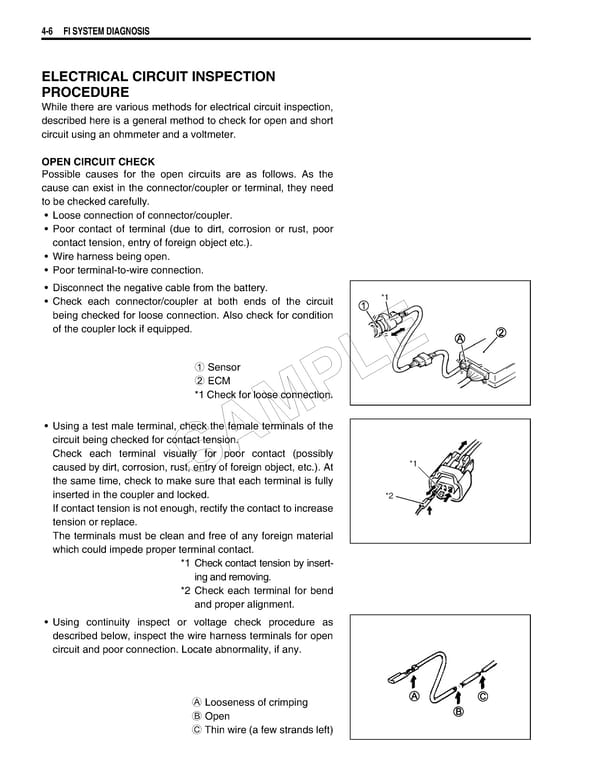
4-6 FI SYSTEM DIAGNOSIS ELECTRICAL CIRCUIT INSPECTION PROCEDURE While there are various methods for electrical circuit inspection, described here is a general method to check for open and short circuit using an ohmmeter and a voltmeter. OPEN CIRCUIT CHECK Possible causes for the open circuits are as follows. As the cause can exist in the connector/coupler or terminal, they need to be checked carefully. • Loose connection of connector/coupler. • Poor contact of terminal (due to dirt, corrosion or rust, poor contact tension, entry of foreign object etc.). • Wire harness being open. • Poor terminal-to-wire connection. • Disconnect the negative cable from the battery. • Check each connector/coupler at both ends of the circuit *1 being checked for loose connection. Also check for condition of the coupler lock if equipped. E 1 Sensor L 2 ECM *1 Check for loose connection. P • Using a test male terminal, check the female terminals of the M circuit being checked for contact tension. A Check each terminal visually for poor contact (possibly caused by dirt, corrosion, rust, entry of foreign object, etc.). At *1 S the same time, check to make sure that each terminal is fully inserted in the coupler and locked. *2 If contact tension is not enough, rectify the contact to increase tension or replace. The terminals must be clean and free of any foreign material which could impede proper terminal contact. *1 Check contact tension by insert- ing and removing. *2 Check each terminal for bend and proper alignment. • Using continuity inspect or voltage check procedure as described below, inspect the wire harness terminals for open circuit and poor connection. Locate abnormality, if any. A Looseness of crimping B Open C Thin wire (a few strands left)
 Suzuki GSXR 1000 K5 K6 Page 165 Page 167