

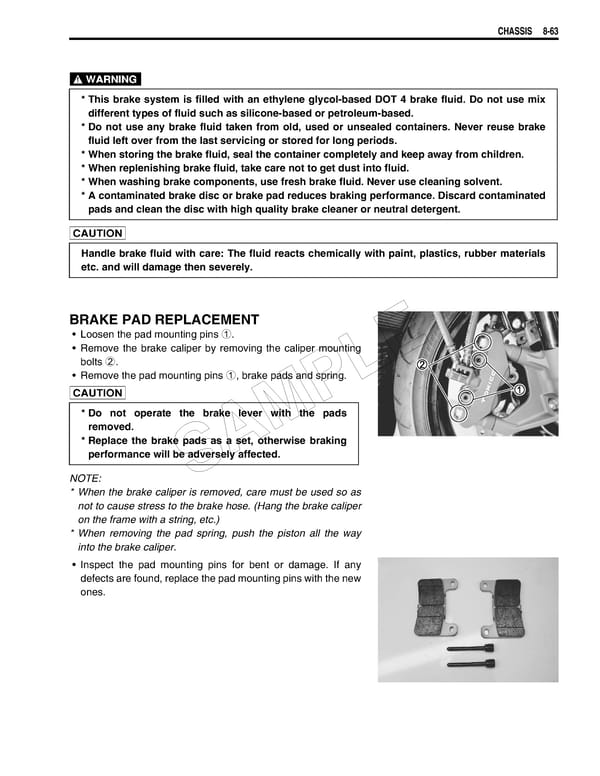
CHASSIS 8-63 * This brake system is filled with an ethylene glycol-based DOT 4 brake fluid. Do not use mix different types of fluid such as silicone-based or petroleum-based. * Do not use any brake fluid taken from old, used or unsealed containers. Never reuse brake fluid left over from the last servicing or stored for long periods. * When storing the brake fluid, seal the container completely and keep away from children. * When replenishing brake fluid, take care not to get dust into fluid. * When washing brake components, use fresh brake fluid. Never use cleaning solvent. * A contaminated brake disc or brake pad reduces braking performance. Discard contaminated pads and clean the disc with high quality brake cleaner or neutral detergent. Handle brake fluid with care: The fluid reacts chemically with paint, plastics, rubber materials etc. and will damage then severely. BRAKE PAD REPLACEMENT • Loosen the pad mounting pins 1. • Remove the brake caliper by removing the caliper mounting E bolts 2. • Remove the pad mounting pins 1, brake pads and spring. L P * Do not operate the brake lever with the pads removed. M * Replace the brake pads as a set, otherwise braking A performance will be adversely affected. NOTE: S * When the brake caliper is removed, care must be used so as not to cause stress to the brake hose. (Hang the brake caliper on the frame with a string, etc.) * When removing the pad spring, push the piston all the way into the brake caliper. • Inspect the pad mounting pins for bent or damage. If any defects are found, replace the pad mounting pins with the new ones.
 Suzuki GSXR 1000 K5 K6 Page 385 Page 387